Single Artwork (The Great Sphinx)
The Great Sphinx (around 2603-2578 B.C.).
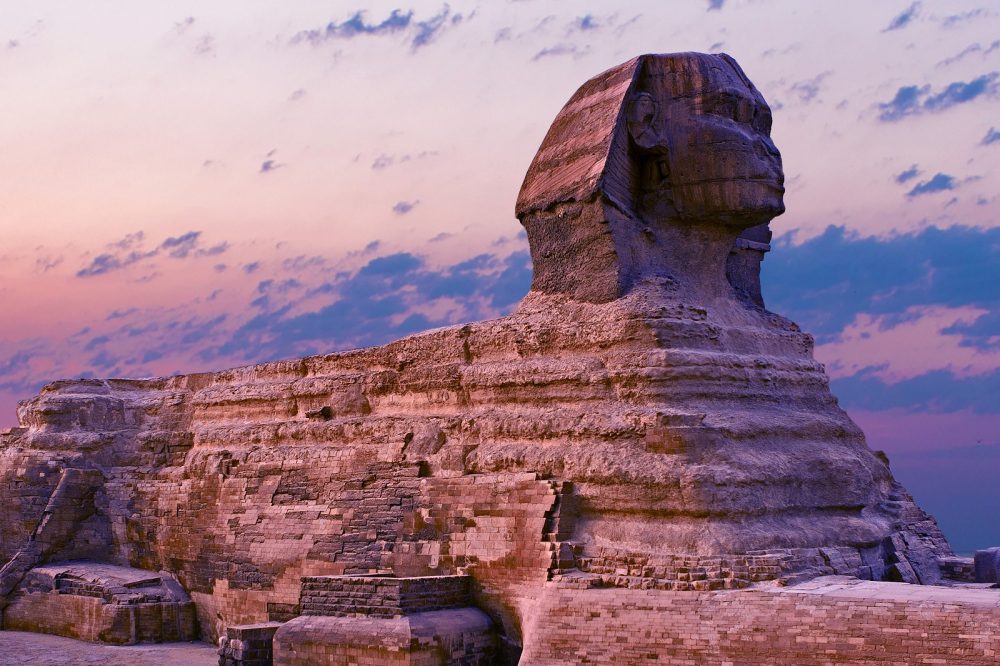
The Great Sphinx is known to be one of the largest monuments in the world, located in Giza, Egypt. It stands 66 feet tall and lays 240 feet long and was carved from a giant piece of limestone. This monument is theorized to be sculpted for the King Khafre when he reigned in (c. 2575–c. 2465 BCE). The head of the sculpture is thought to be the head of King Khafre, which is attached to the body of a lion hence why it gets the name sphinx. "The statue was never known as 'the sphinx' by the ancient Egyptians. The word 'sphinx' is Greek and came to be applied to the Egyptian sculpture at Giza, according to Verner (and others) through a translation of the Egyptian name shesep-ankh ("living image") by which the Egyptians referred to the piece as well as to other representations of royal figures." (Mark, Joshua)
"The lion was a royal symbol as well as being connected with the sun as a symbol of the horizon; the fusion of this powerful animal with the head of the pharaoh was an icon that survived and was often used throughout Egyptian history." (Mark, Joshua) A lot of scholars theorize that this sculpture was created by the older brother of the king Redjedef who was thought to have made the sculpture for the previous king (his father) Khufu. Other scholars theorize that both The Great Pyramid and Great Sphinx were made for the younger brother Khafre rather than their father. The monument of the Sphinx is in line with the pyramid which adds to the theory that both these monuments were made specifically for King Khafre during his ruling as king.

Dr. Amy Calvert, "Pyramid of Khafre and the Great Sphinx," in Smarthistory, August 8, 2015, accessed September 2, 2020, https://smarthistory.org/pyramid-of-khafre-and-the-great-sphinx/.
Mark, Joshua J. "The Great Sphinx of Giza." Ancient History Encyclopedia. Last modified October 26, 2016. https://www.ancient.eu/Great_Sphinx_of_Giza/.
It seems evident that the Egyptians really value their royalty and family members, to build statues that are known all around the world in their honor is a huge testament to the type of people they were
ReplyDeleteHi Emily!
ReplyDeleteI really liked the detail you put into this post, the history of it, the description of the sculpture itself was very in depth and nice to read. I never knew much about the Great Sphinx, and it's fascinating to know that it is a symbol of royalty. Great post!
Emily, What a blog post. I truly loved reading about the Great Sphinx in your post. I thought you did a fantastic job at describing the monument and helping us understand the true meaning of why this was crafted. I never knew that the head was sculpted to be for the king Khafre. The amount of detail and thought that went into this monument is absolutely insane. Thank you for describing such a great piece of history to us.
ReplyDelete
ReplyDeleteHi Emily, I still can't believe how amazing it is that over thousands of years ago they accomplished such amazing works of art with limited resources. I will have to look it up sometime to find out if his nose was broken off or did they just not finish. I wonder if The Great Pyramid was dedicated to the father and The Great Sphinx to the son. Great Job!
I didn't realize the sphinx was that old! I know it was buried before modern archaeological attempts at unearthing it but it really is in great condition. I think the artist behind it (whoever they were) really did a great job creating a very regal feeling from the sphinx. Though it may have originated as an idol to King Khafre, it later took on a more of a divine meaning to later Egyptians.
ReplyDelete